
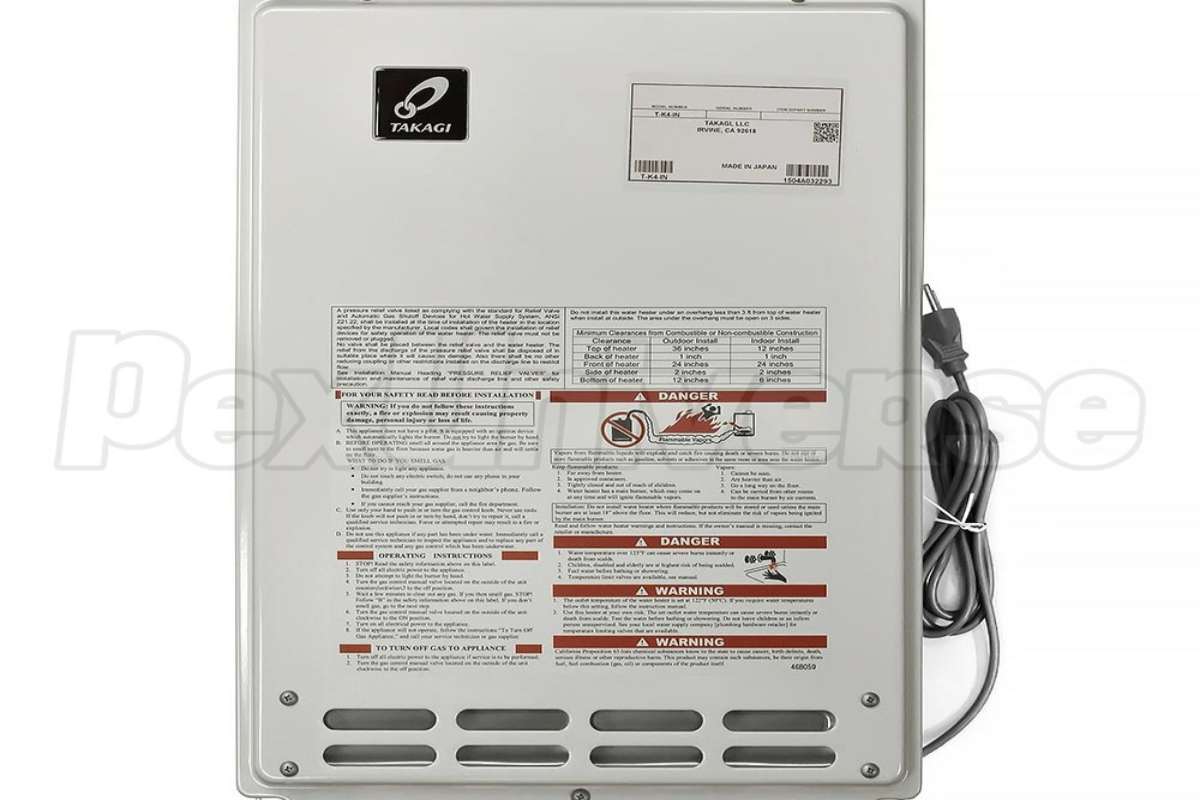
- Why “tankless” is not the most useful way to think about the system
- How central installations often defeat the point of on-demand hot water
- Why localized units may better match the original logic of the technology
- What homeowners should ask before paying extra for a trend
I have had more than one homeowner look at me as though I had grown a second head when I asked a simple question about a tankless water heater installation: “Where do you want the others?” Most people assume one central tankless unit is the obvious answer. That assumption is exactly where the problem begins.
Tankless water heaters have become one of those products the public loves in theory. They sound efficient. They sound modern. They sound smarter than keeping forty or sixty gallons of hot water sitting in a tank all day. And in principle, that is true. The idea behind the technology is good. The way it is commonly used, however, often misses the point entirely.
The name itself causes confusion
The first mistake is in what people call the thing. “Tankless water heater” is the popular label, but it is not the most useful one. The better term is on-demand water heater. That phrase tells you what the technology was designed to do: produce hot water where and when it is needed, without maintaining a large heated reservoir around the clock.
That is the promise. That is the logic. And that is where many installations go off the rails.
The true benefit of an on-demand system is not simply that it lacks a tank. The real benefit is that it should reduce the delay between the call for hot water and the delivery of hot water.
Where the good idea starts going wrong
In a great many homes, the tankless unit is installed centrally to serve the entire house. On paper that sounds efficient. In reality, it often recreates the very problem the system was supposed to solve. The hot water still has to travel through the same long plumbing runs to reach the bathrooms, the kitchen, and the laundry. The pipes become the temporary holding tank. The homeowner still waits for hot water. The unit still works hard to serve multiple distant fixtures. And the result is often a more expensive system that performs like a dressed-up version of the old one.
That is why I say this is another good idea gone wrong. The idea itself is not flawed. The widespread application of it is.
What homeowners think they are buying
Most people think they are buying three things when they choose tankless: energy savings, endless hot water, and faster hot water delivery. They may get one or two of those depending on the design, but they often do not get all three. The “faster delivery” claim is the one most often misunderstood.
If the heater is mounted in a remote location and asked to serve the entire home, the wait at the fixture can still be frustratingly familiar. In that case, the system may give you hot water on demand at the appliance, but not at the point of use.
That distinction matters more than the sales brochure usually admits.
How I prefer to use the technology
When I design a project, I think about where the hot water is actually needed. That usually leads me toward smaller, localized on-demand units rather than one oversized central unit meant to do everything. A bathroom can have its own heater. The kitchen can have its own heater. The laundry may share with one of those depending on layout and usage.
That kind of design aligns the equipment with the actual purpose of the technology. Now the unit is close to the fixture. Now the delay is shortened. Now the homeowner experiences the benefit that sold the concept in the first place.
It is not the only possible approach, but it is the one that makes the most sense to me when fast delivery and efficiency are the true goals.
The smartest system is not the one with the most marketing behind it. It is the one designed around how the house actually functions.
Gas vs. electric: each has its place
Both gas and electric on-demand systems have strengths. Gas units generally heat more aggressively and can support a wider range of demand. They are powerful and effective, but they also tend to cost more, require more involved venting, and usually need exterior or specially planned installation conditions.
Electric units are often easier to place. They can fit under vanities, in utility spaces, or near the point of use. They are generally more affordable, more flexible in location, and often make very good sense for targeted use in bathrooms or kitchens.
As always, there is no universal answer. The right answer depends on the layout of the house, the number of fixtures, the electrical or gas capacity available, and the expectations of the homeowner.
Why the industry often gets this wrong
Supply houses, plumbers, and contractors tend to sell what the market already recognizes. The market recognizes large central tankless units. Homeowners ask for them by name. Builders install them because clients expect them. The cycle feeds itself.
That does not mean the approach is always wrong. It does mean the approach is often accepted without enough thought. Very few homeowners understand the original logic behind on-demand systems, and very few contractors take the time to explain that logic in practical terms.
So the industry delivers what the public asks for, even when the public is asking for the right product in the wrong configuration.
The real question: what benefit are you after?
If your goal is simply to remove a bulky storage tank and reclaim some space, a central tankless unit may still make sense. If your goal is to provide hot water to several fixtures in succession without running out, a large properly sized system may also make sense.
But if your real goal is fast hot water at the point of use, then the design conversation needs to change. At that point, proximity matters. Plumbing layout matters. Fixture grouping matters. And the answer may not be one big unit in the usual place.
What I tell homeowners
I am not anti-tankless. I am anti-misunderstanding. Those are not the same thing. I like the technology. I like the logic behind it. I simply do not like watching homeowners pay a premium for a system that does not deliver the benefit they thought they were buying.
That is what happens too often in remodeling: a clever idea becomes a trend, the trend becomes a default, and somewhere along the way the original purpose gets lost.
The bottom line
Tankless water heaters are not a bad invention. Quite the opposite. They were designed to solve a real inefficiency. But when they are installed as one large central substitute for a traditional tank, the system can wind up functioning in a way that undermines its best advantage.
So before you commit to one, ask a more useful question than “Should I go tankless?” Ask this instead: What exactly am I trying to improve, and does this layout actually accomplish it?
That one question will save you more grief than any sales pitch ever will.
A good product can still become the wrong answer when the layout ignores the real purpose of the technology. With hot water, proximity often matters more than hype.