
- Why rectangular roof shadow lines usually begin with the decking below
- How swollen OSB edges telegraph through finished shingles
- Why dry-in timing, spacing, and installation discipline matter
- What proper roof decking installation should look like
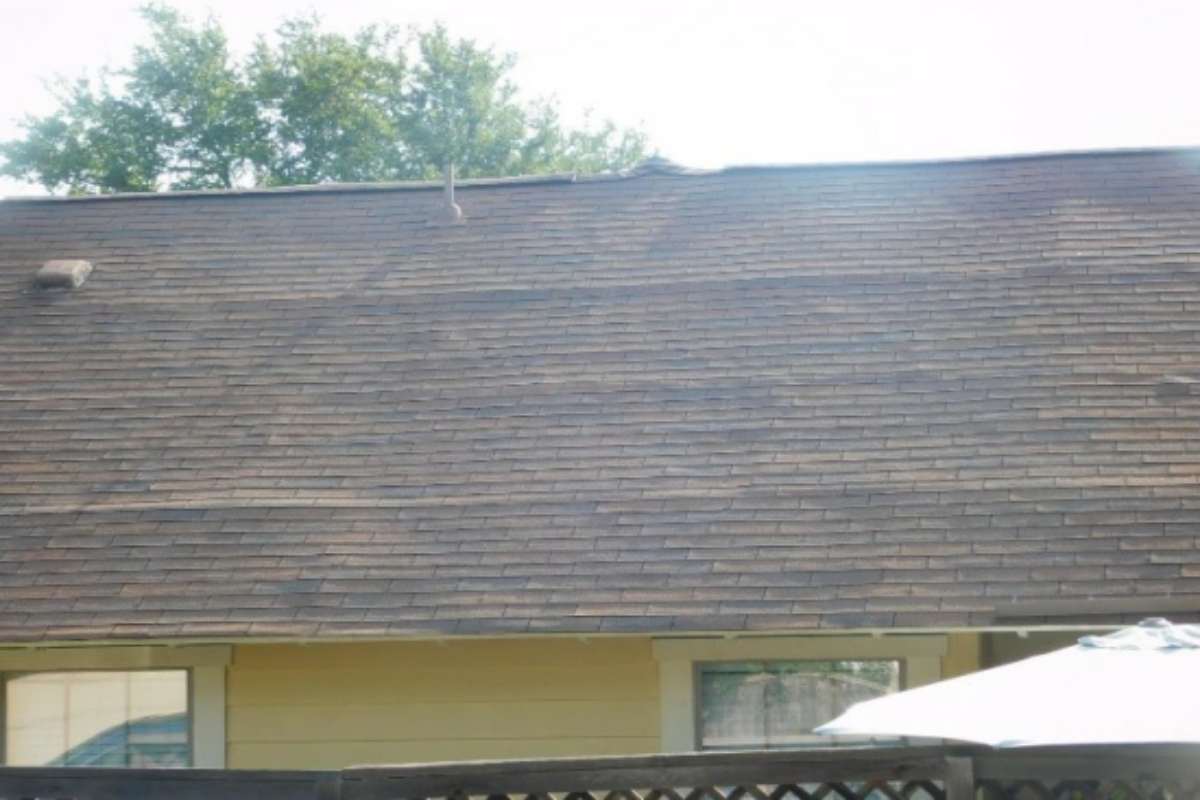
Drive through almost any subdivision at the right time of day and you will see it. Long, rectangular shadow lines appear beneath the shingles where the 4-by-8 decking sheets are revealing themselves through the finished roof surface. In some neighborhoods it is so common that people assume it must be normal. It may be common, but that does not make it good workmanship.
When homeowners notice those patterns, they often assume the shingles are defective. Most of the time, they are not. What you are seeing is the roof deck telling the truth about what happened before the shingles were installed.
In many cases, the edges of the decking have swelled after taking on moisture. Once that swelling occurs, the shingles simply follow the uneven surface beneath them. The roof may still shed water, but it will never look as flat, clean, and orderly as it should.
The finished roof does not erase poor preparation below it. It preserves it.
OSB became the standard for a reason
Years ago, half-inch CDX plywood was the standard roof decking material on many homes. Today, oriented strand board, or OSB, is the common residential standard. It became popular because it is consistent, widely available, cost-effective, and manufactured with a surface treatment that gives it a measure of resistance to casual moisture exposure.
That sounds reassuring, and in limited exposure conditions it is. But moisture resistance is not the same thing as moisture immunity.
The weakness usually shows up at the edges. Every time a sheet is cut, scraped, handled roughly, or damaged during delivery and installation, the protective surface at the edge can be compromised. Once that happens, water can penetrate the exposed material and the board begins to swell. That swelling is what later telegraphs through the shingles.
Moisture exposure is often the real cause
In my experience, those visible roof patterns are usually evidence that the decking sat exposed too long before the roof was properly dried in. It does not necessarily take months of abuse to create the problem. A hard rain after installation can be enough, especially if the cut edges are already vulnerable.
Once those edges swell, they do not flatten themselves back out. The underlayment goes on, the shingles are installed, and the raised seams remain locked into the finished profile of the roof. Later, when the sun hits from the right angle, the entire roof advertises the earlier mistake.
That is why the roof deck should be dried in as quickly as possible. If the final roofing cannot be installed immediately, then a proper moisture barrier should be applied before the weather gets a chance to work on the exposed deck.
Cheap protection during the vulnerable phase of construction usually becomes expensive regret later.
Underlayment matters more than many people think
Years ago, felt paper was the standard temporary and secondary protection beneath shingles. Today, synthetic composite underlayments are better products. They cost more, but they provide stronger and more durable protection during the period between framing and final roofing.
That added cost is often worth it. A roof system is only as secure as the sequence used to protect it while it is still exposed.
Sometimes the problem is not moisture at all
Not every roof pattern beneath shingles is caused by swollen OSB seams. Sometimes the problem begins lower, in the framing itself. If the rafters or trusses were not laid out consistently, or if the installer failed to correct irregularities as the work progressed, the decking will reflect those mistakes.
Roof decking installation is more technical than many production crews want to admit. Rafters and trusses may be designed for regular spacing, but that does not mean every member arrives perfectly straight or stays perfectly aligned at span. If the installer simply fastens decking over crooked framing without correcting the layout, the finished roof will reveal that carelessness.
This is not only a cosmetic issue. Poor alignment can affect structural consistency, create uneven support, and throw off the next course of decking above it.
Good roof work requires more than speed
I once had a client tell me that he preferred steel structures to wood because steel comes straight from the factory. I told him, “God makes wood. We make it straight.” That is the job. Materials do not install themselves correctly just because they arrive on site.
Quality construction requires someone who cares enough to correct the natural irregularities of the material during installation. On a roof, that means paying attention to layout, alignment, support, spacing, and fastening patterns from the beginning. Rushing the process may save time for the installer, but the roof will continue telling on him for the rest of its life.
A good roof is not simply waterproof. It is flat, orderly, properly supported, and installed with enough care that angled light does not expose a history of shortcuts.
Do not forget the importance of H-clips
Whenever the framing interval exceeds 16 inches on center, H-clips become important. These clips are installed between rafters to support panel edges and maintain the required spacing between decking sheets. That spacing matters because wood-based sheet goods need room to expand and contract without buckling or crowding each other.
Without proper support and spacing, the roof deck is more likely to move in ways that eventually show up at the surface. What appears to be a minor shortcut during installation can become a very visible defect later.
Fasteners matter too
The fastening method is another detail many people overlook. The right fastener, the right spacing pattern, and the right installation method all contribute to the performance of the finished roof. Whether staples or nails are used depends on code, design, wind requirements, manufacturer standards, and local practice.
The larger point is simple: fastening is not guesswork. It is part of the system. Weak decisions here can show up later in ways the homeowner never expected.
What homeowners should take away from this
If you can see the outline of the decking beneath your shingles, there is a good chance the deck was exposed to too much moisture before the roof was properly dried in, or that the framing and decking were installed without the level of care required to produce a clean, flat finished surface. In some cases, it may be both.
This does not automatically mean the roof is leaking. It does suggest that the installation process likely fell short of what it should have been. Roofing is not just about keeping water out today. It is about installing the system in a way that protects the structure and preserves the appearance of the home over time.
A roof is one of the largest visible surfaces on a house. When it is done right, most people never think about it. When it is done carelessly, it keeps announcing that fact every time the light hits it the right way.
Roof decking is one of those hidden parts of construction that homeowners rarely notice until something goes wrong. But as in so many areas of building, what is hidden matters just as much as what is visible.